Systematically improving energy efficiency is a key lever for companies seeking to reduce operating costs and strengthen competitiveness. Energy audits and energy management systems play an important role in this process and are becoming increasingly relevant under the revised EU Energy Efficiency Directive (EU) 2023/1791.
The updated Directive shifts the focus from company size to actual energy consumption, meaning that a wider range of businesses may in future be subject to energy audit or energy management obligations. Under the current framework, companies with an average annual energy consumption above 10 TJ (~2.8 GWh) over the past three years are required to carry out an energy audit every four years, unless they have implemented an energy management system. Companies exceeding 85 TJ (~23.6 GWh) are required to establish a certified energy management system.
These requirements may be waived if a company already operates a certified environmental management system that includes an energy audit meeting the Directive’s standards.
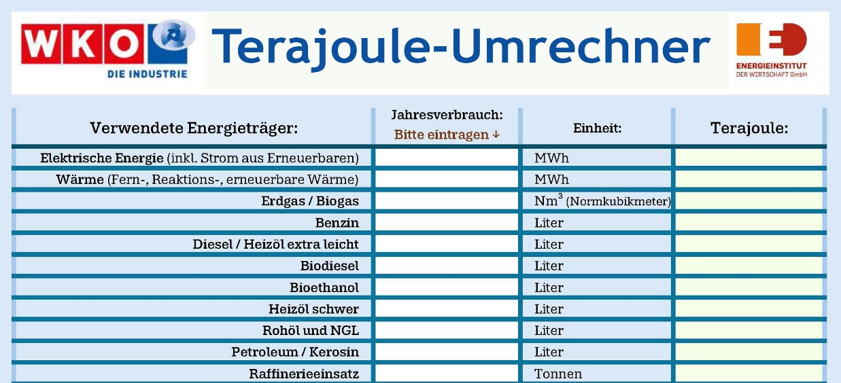
The EcoSMEnergy project supports SMEs in improving energy efficiency through practical tools, training and guidance that help companies reduce costs and strengthen competitiveness. In this sense, the Energy Institute for Businesses on behalf of the Austrian Federal Economic Chamber’s Industry, partner of the project, developed a tool called terajoule conversion calculator, to support companies in understanding their energy use. The tool enables businesses to convert different energy sources—such as electricity, gas and fuels—into a common unit and calculate total annual consumption.
Beyond compliance, the transition to more systematic energy management offers companies greater planning certainty and significant potential for cost savings. It also supports long-term competitiveness and sustainability.