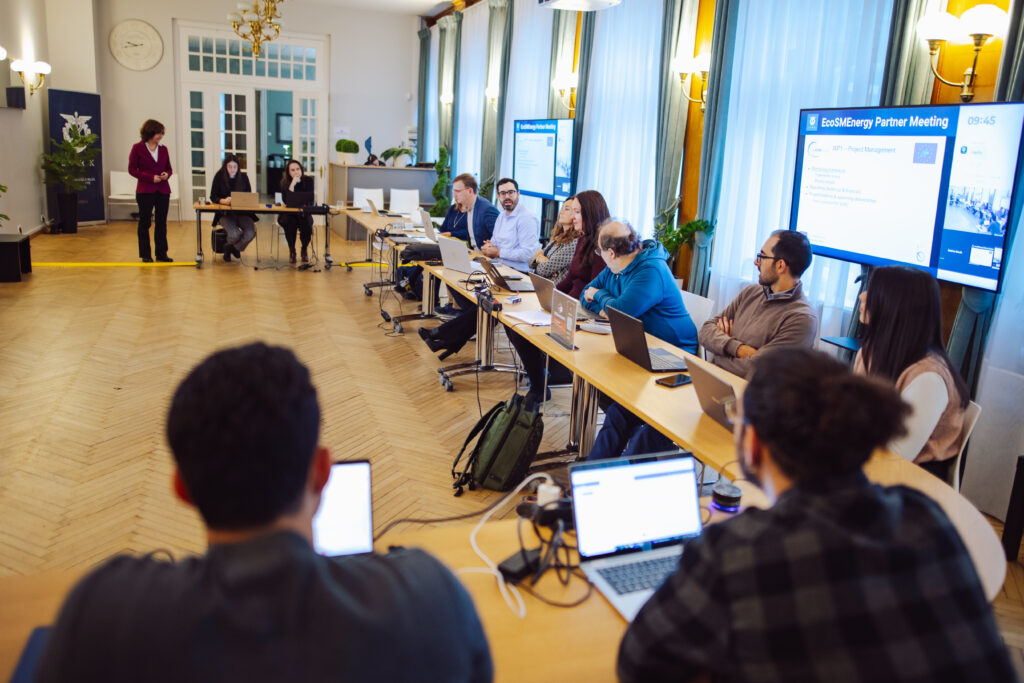
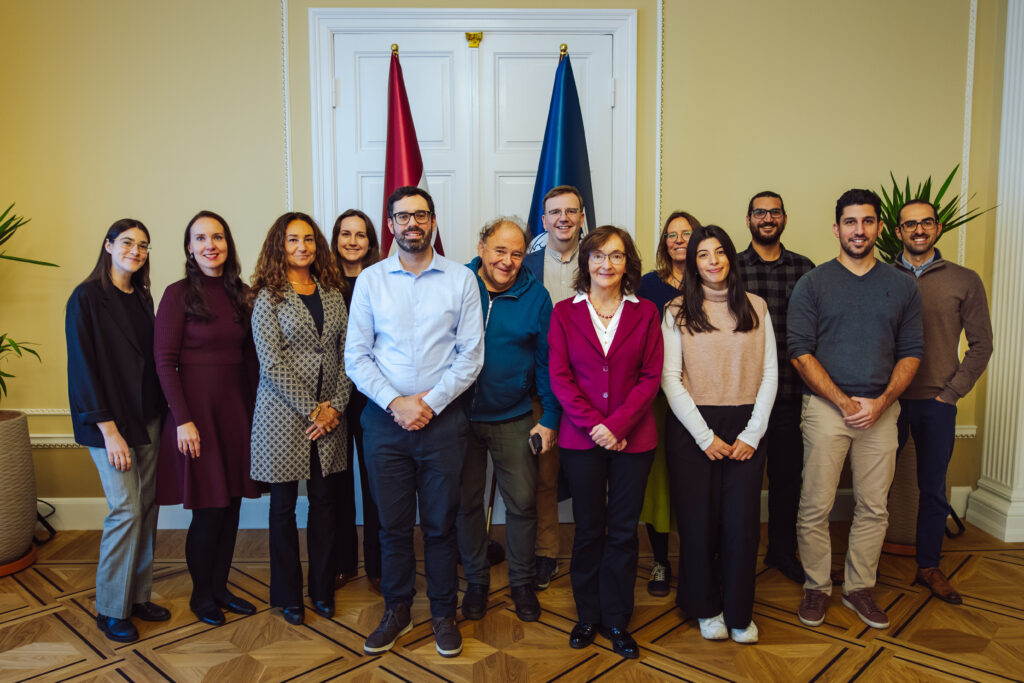
The EcoSMEnergy Project Steering Committee met at the Latvian Chamber of Commerce and Industry on 22 and 23 October to take stock of the implementation of EcoSMEnergy and look into the following steps. The different activities of the first implementation year laid the basis for the next steps.
Thanks to the outcomes of the initial scoping study, the project partners were able to define the conditions for the energy audits and the best practices gathering. While the energy audits are currently ongoing, the best practices gathering will start in the coming months.
The Voluntary Code of Conduct is a key tool of the capacity building phase that will be initiated in 2026, and during the project steering committee meeting, the project partners received an insight into the foreseen training path that will allow SMEs to engage in an energy management process tailored to their needs and on the long term become more energy efficient.
The project partners also discussed the online tools that are being developed/updated in the frame of EcoSMEnergy: the Impawatt platform will serve as an e-learning platform and is soon going to be available to the project partners in their national languages, hosting the different training materials. A dedicated Energy Management System platform is in its early testing phase and is going to be rolled out in 2026, in the wake of the capacity building sessions.
Access to finance is a crucial question for SMEs when they want to engage in energy improvements, and the project partners defined their working plan for the coming year in that regard, looking at how to create synergies with the upcoming training courses.
All ongoing and upcoming activities were being considered keeping in mind sustainability, stakeholder engagement, and long-term impact.
The project partners concluded the Project Steering committee meeting successfully and with a full agenda for the coming months.